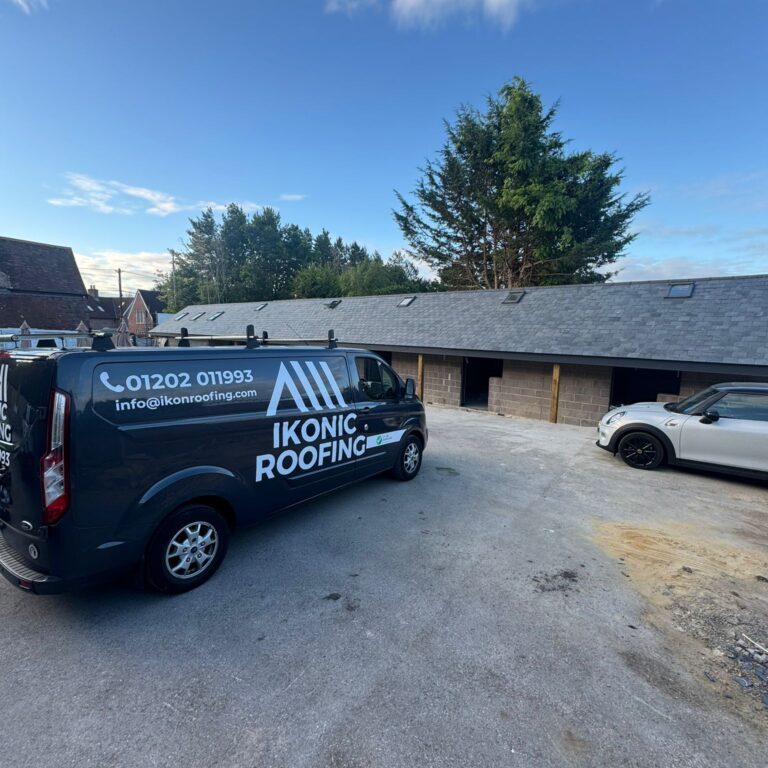
A behind-the-scenes roof element that does more than most people realise
Leadwork isn’t the flashiest part of a roof, but it’s one of the most important. At Ikonic Roofing, we work on everything from older cottages to modern new builds, and leadwork plays a crucial role in all of them — especially here in weather-mixed Dorset.
What leadwork actually does
Lead is used to seal the joins and edges around chimneys, walls, dormers and other areas where different surfaces meet. These spots are naturally more vulnerable to water getting in, so the lead forms a flexible, watertight layer that protects your home.
Why quality leadwork matters
When lead is fitted properly, it moves naturally with temperature changes. This is vital because roofs expand and contract throughout the year. Well-installed leadwork adapts without cracking or pulling away, keeping everything sealed.
Poor leadwork, on the other hand, can be one of the quickest ways for water to find its way into your home.
Where we typically see issues
Most leadwork problems appear around chimneys, where old mortar, lifted flashing or general ageing create gaps. We also see issues around extensions or areas where different roof levels meet.
How we approach leadwork
At Ikonic Roofing, we take leadwork seriously because it’s a key part of long-term roof protection. Whether we’re working on a heritage property or a newer home, we use traditional skills combined with modern best practice to ensure a secure, neat finish.
If you’re ever unsure about the condition of your leadwork, we’re always happy to take a look and give clear, honest advice.